

You found the home you love. Then the cash-to-close number arrived, and it looked a lot bigger than the down payment you had planned. Before you cancel, it helps to understand what that number actually includes.
Cash to close is the estimated amount you still need to bring to closing. It usually includes your down payment plus several other charges, minus money you have already paid and any credits. Switching to another property does not automatically make those categories disappear.
I’m Angie, and I want Orange County and Southern California buyers to understand what they are paying for before giving up a home they love.
Why Does the Cash-to-Close Number Feel So Overwhelming?

The cash-to-close figure feels overwhelming because it combines several expenses into one large amount. You’ve searched, toured homes, negotiated, and started to picture your life in the house. Then the Loan Estimate arrives, and the amount you need looks different from the down payment you planned.
Before you cancel, pause long enough to tell the difference between a purchase you truly cannot afford and an estimate no one has walked through with you yet. This is a normal part of buying a home in Southern California, and it is worth slowing down for. The Consumer Financial Protection Bureau (CFPB) has a detailed Loan Estimate explainer you can use to review yours line by line.
What Exactly Makes Up Your Cash to Close?
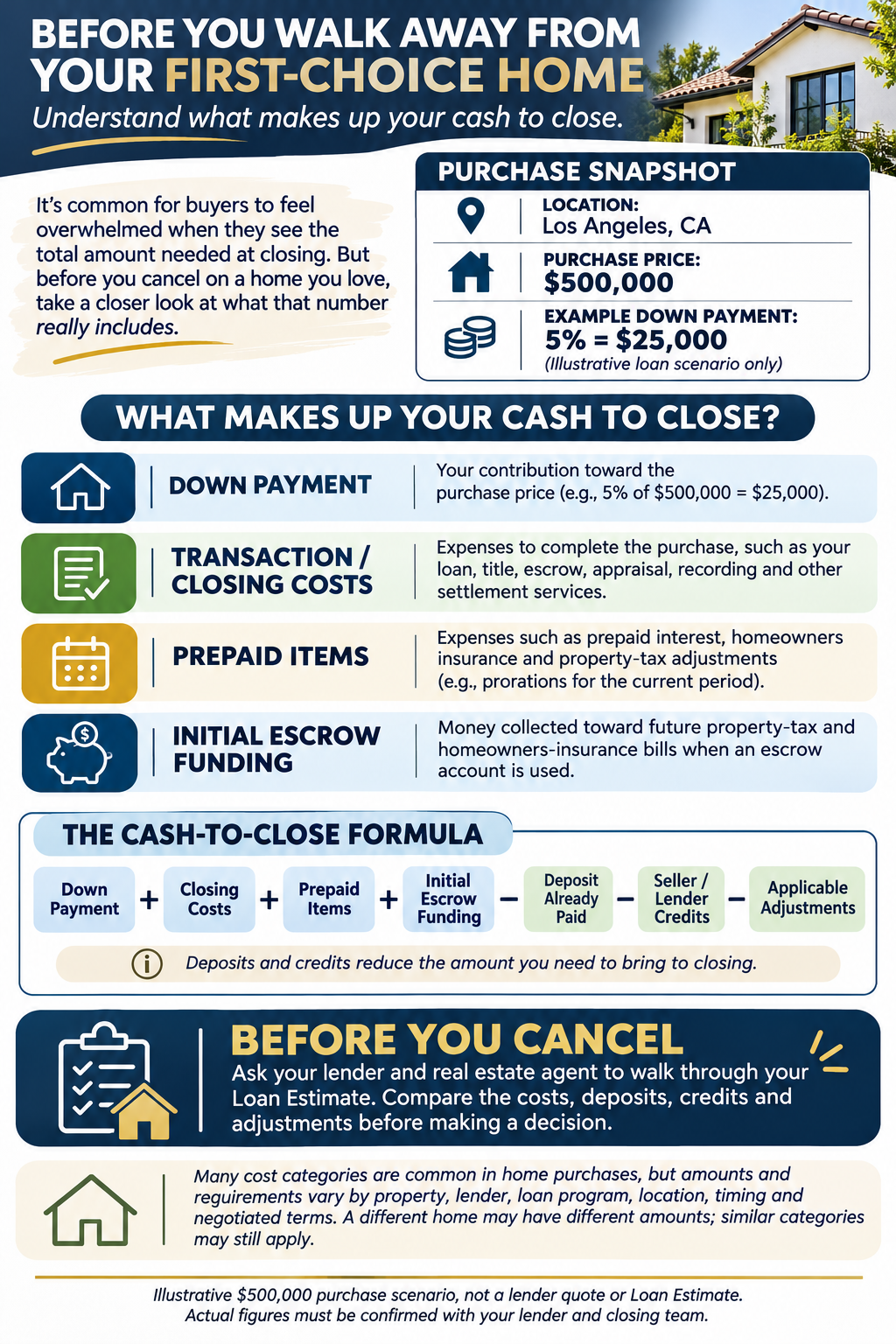
Cash to close generally combines your down payment, transaction and closing expenses, prepaid expenses, initial escrow account funding, and applicable adjustments, minus money already deposited and any available credits.
The down payment is your contribution to the purchase price. Closing expenses may include lender charges, the appraisal, title and settlement services, and recording fees. Buyer’s agent compensation can be part of those costs too, depending on how your agreement and the purchase contract are written. Prepaids can include insurance and mortgage interest. Your initial escrow account deposit may help fund future property taxes and insurance. Earnest money you have already paid, and eligible lender or seller credits, can reduce the amount still due. In Southern California, you may also see items such as HOA prorations on the statement. Those amounts vary by property, so your lender and escrow officer should walk through the ones that apply to you.
One detail that surprises a lot of people: don’t mistake the escrow company’s settlement fee for the initial balance held in a lender-managed escrow account. They are different things, and both can show up in the total. The CFPB’s Closing Disclosure explainer is a helpful companion when you get to that form. If you want a wider view of your California home budget and the costs of buying, I have written about that too.
Will You Pay These Same Closing Costs If You Buy Another Southern California Home?

Many of the same categories may appear on another financed purchase, although the amounts can differ significantly. You may still see lender fees, appraisal fees, title or settlement charges, prepaids, initial escrow account funding, and sometimes agent compensation.
Your next home may have a different price, insurance premium, property taxes, lender, loan program, timing, negotiated credits, or transaction terms. A second property may truly be a better financial fit. But if you switch simply because you think closing expenses will disappear, you may be solving the wrong problem.
Ask your lender to compare actual scenarios before you walk away from a property you love. For California homebuying resources, the Department of Real Estate’s first-time homebuyer guide is a solid, independent place to start.
How Can a $500,000 Home Require More Than a $25,000 Down Payment?
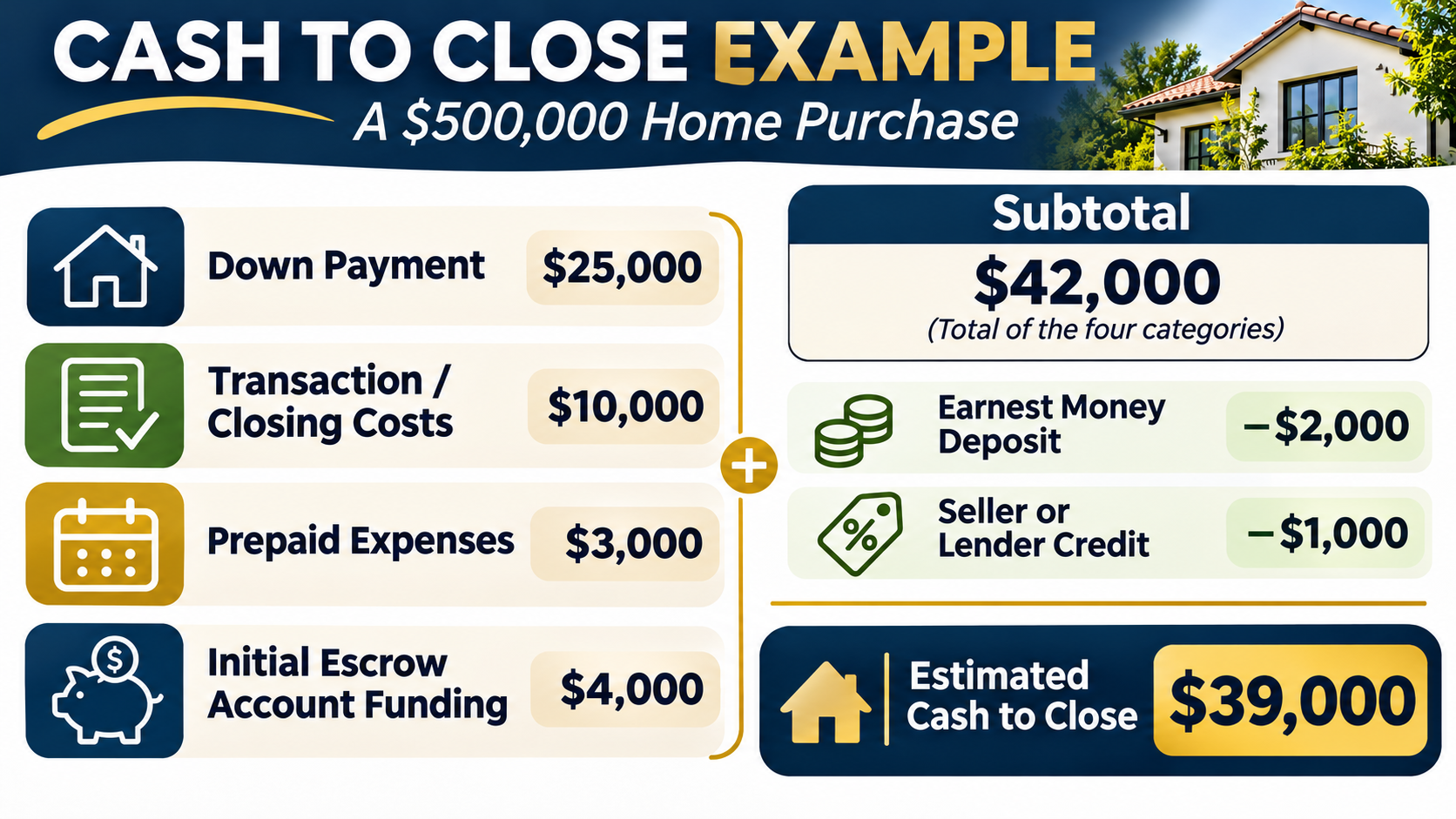
A 5% down payment on a $500,000 home is $25,000, but that is not necessarily the total amount still due at closing. Here is a mathematical illustration, not a lender quote and not a typical Orange County or Los Angeles figure:
| Item | Example |
|---|---|
| Down payment | $25,000 |
| Transaction and closing costs | $10,000 |
| Prepaid expenses | $3,000 |
| Initial escrow funding | $4,000 |
| Earnest money already paid | −$2,000 |
| Seller or lender credit | −$1,000 |
| Estimated remaining cash to close | $39,000 |
Prepaids and initial escrow funding are broken out here to explain the total. They should not be added twice to the closing costs shown on an actual Closing Disclosure. Your numbers will depend on the property, the loan, timing, taxes, insurance, and any credits. In California, buyers may also receive a supplemental property tax bill after closing; ask your lender, escrow officer, or a qualified tax professional how that works for your purchase. Fannie Mae’s homebuyer FAQ also covers common closing-cost questions, including what is typically included and how those costs are estimated.
Which Closing Costs Can Be Reduced, Negotiated, or Credited?
Some expenses may be negotiable, shoppable, or offset by eligible credits. Others reflect lender requirements, provider charges, taxes, or insurance obligations.
You can ask about comparing lender offers, permitted seller contributions, and lender credits. A lender credit may reduce upfront costs in exchange for a higher mortgage interest rate. Seller contributions are limited by the purchase contract and by mortgage-program rules. Review those options with your lender, as the CFPB recommends.
Your agent’s compensation is negotiable too. It may be paid by you, by the seller through a concession or the offer terms, or split, depending on your buyer representation agreement and the purchase contract.
Reducing an amount collected upfront does not necessarily erase the underlying financial obligation. If you are looking for help with funds, some buyers also explore assistance programs. I have written about a down payment and closing-cost assistance program; eligibility and terms have to be confirmed with the lender, because programs change.
What Happens Emotionally When You Think About Canceling a Home Purchase?
Financial surprises can turn excitement into fear very quickly. Yesterday you were planning your furniture layout. Today you are wondering whether you have made a mistake.
I have written about that swing in The Emotional Roller Coaster of Buying a Home. The question worth asking is whether you are walking away because the home really exceeds your financial limits, or because no one has explained the cost breakdown yet.
Your feelings deserve attention, and so do your numbers. An explanation can bring clarity, but it should never override a genuine affordability concern.
What Should You Ask Your Agent and Lender Before Walking Away?
Ask for a line-by-line review of the Loan Estimate and cash-to-close calculation before you decide. These seven questions will help:
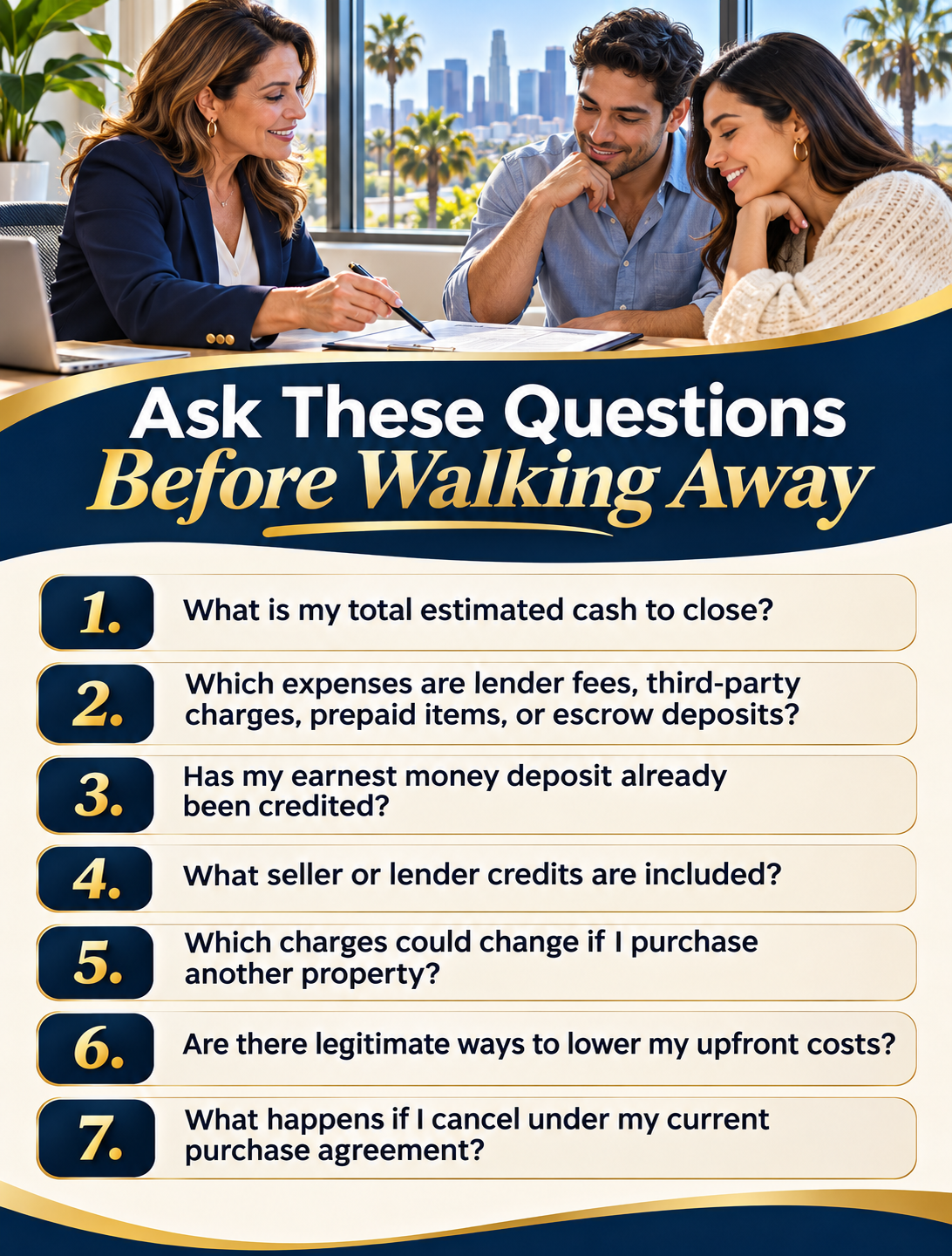
- What is my total estimated cash to close, and how was it calculated?
- Which expenses are lender charges, third-party fees, prepaid items, or escrow deposits?
- Has my earnest money deposit already been credited?
- What seller or lender credits are included?
- Which charges could change with a different property?
- Are there legitimate ways to lower upfront costs?
- What are the contractual consequences and deadlines if I cancel?
Your Closing Disclosure provides final loan and closing figures, subject to applicable corrections and changes. For most covered mortgages, it must be received at least three business days before closing. Compare it carefully with your Loan Estimate, and ask about any difference you do not understand. The CFPB explains how to review your documents before closing. When it is time to send funds, confirm wiring instructions directly with your escrow or title company. Do not rely on a last-minute email change.
How Can Clear Guidance Help You Make a Confident Decision?
Your agent can help you understand purchase-contract terms and coordinate questions with the lender, escrow, and title professionals. You should never feel embarrassed to ask what a line item means.
Better information may make it easier to keep the home you want, or it may show that canceling is the safer financial choice. The goal is an informed decision, not a pressured one.
Before You Decide, Know What That Number Includes
Before you decide, know what that cash-to-close number is actually made of. Take time to review the real figures with your lender, and distinguish an unexpected estimate from a purchase you truly cannot afford. Walking away can be the right decision. I just want you to make it with understanding, not confusion.
If you are buying in Orange County, Los Angeles, or elsewhere in Southern California and want help talking through the process, I would be glad to walk through the questions to bring to your lender. Schedule a buyer consultation, or call or text me at 949-710-3813. I’m Angie Weeks, Broker Associate with First Team Real Estate, DRE #01398537. You can also find me at AskAngie.com. I’m here for you.
Frequently Asked Questions About Cash to Close
If I cancel this home purchase, will I pay closing costs on the next house?
If you finance another home, you will generally see many of the same cost categories again. The exact amounts can change with the price, loan program, property taxes, insurance, providers, timing, and any negotiated credits. Canceling may also have contract or earnest-money consequences, so review those with your agent before you act.
Is earnest money included in cash to close?
Earnest money you have already paid generally counts toward the purchase and reduces the amount still due at closing when it is properly applied. Confirm the credit on your loan and settlement documents, and ask your lender or escrow officer to show you the line item.
Can a seller pay closing costs in California?
A seller may agree to contribute toward eligible closing expenses. Loan programs and the purchase contract limit how much can be contributed and which charges can be covered. Review any proposed concession with your agent and your lender.
Is my agent’s compensation included in my cash to close?
It can be. Compensation is negotiable, and who pays it depends on your buyer representation agreement and the purchase contract. If you are responsible for some or all of it, that amount may show up in your cash-to-close figure. Ask your agent to walk you through how it is being handled on your purchase.
Can cash to close change before closing?
Yes. Estimates can change as permitted charges, prepaids, credits, and adjustments are finalized. Some changes are restricted by disclosure rules. Compare your Loan Estimate with your Closing Disclosure, and ask about any difference you do not understand.
Should I cancel if I don’t have enough money to close?
First verify the amount and review legitimate options with your lender. If there is not a safe way to fund the purchase and still protect your financial stability, canceling may be the right decision. Discuss contract deadlines and possible consequences with your agent before you act.







Leave a Reply