

By Angie Weeks, Broker Associate | First Team Real Estate
You want your home to make a great first impression. You also have a moving budget, a calendar, and possibly a dog who believes every sofa belongs to him.
So, should you pay for physical staging, use digitally staged photos, or sell with the furniture you already have?
The best choice depends on your home’s condition, your competition, your timeline, and the total cost—not just how beautiful the listing photos look. For Orange County and Southern California sellers, the goal is a presentation plan that makes financial and practical sense. Local competition matters, too; our Orange County Housing Market Forecast 2027 explains why pricing and preparation belong in the same conversation.
Do staged homes sell faster or for more money?
The National Association of REALTORS®’ 2025 Profile of Home Staging offers useful context:
- 49% of sellers’ agents reported that staging reduced time on the market: 30% reported a slight decrease and 19% a substantial decrease.
- 29% of agents reported that staging led to offers 1%–10% higher.
- 83% of buyers’ agents said staging helped buyers picture the property as a future home.
Encouraging? Yes. A crystal ball hiding under the staged coffee table? Sadly, no. These numbers reflect agents’ observations, rather than a controlled comparison of closed sales. Higher offers do not always become higher closing prices, and staging cannot take all the credit for a successful sale.
For another perspective, the Real Estate Staging Association’s first-half 2026 report lists an average of 10 days on market across 170 participating staged properties. Its sale-price sample averaged 11% above asking. Before we order the celebration balloons: the price sample specifically includes above-list sales, and neither figure compares those properties with equivalent unstaged homes. Above asking also is not the same as above market value. These results are useful context, rather than a forecast for your address.
Does physical staging sell faster than virtual staging?
There is no reliable head-to-head answer in the public research reviewed for this post. NAR’s headline price and market-time findings cover staging generally; they do not isolate the two methods. Anyone promising an exact number of days saved should probably show us the homework before we rent the sofa.
And a quick accepted offer still has to make its way through escrow. The sofa cannot hurry the appraiser. Financing, inspections, appraisal, and the agreed closing schedule still matter.
The practical difference is easier to explain: physical staging shapes both the photographs and the showing. Virtual staging shapes the photographs; buyers still tour the property in its actual condition.
Physical staging: an experience buyers can walk through
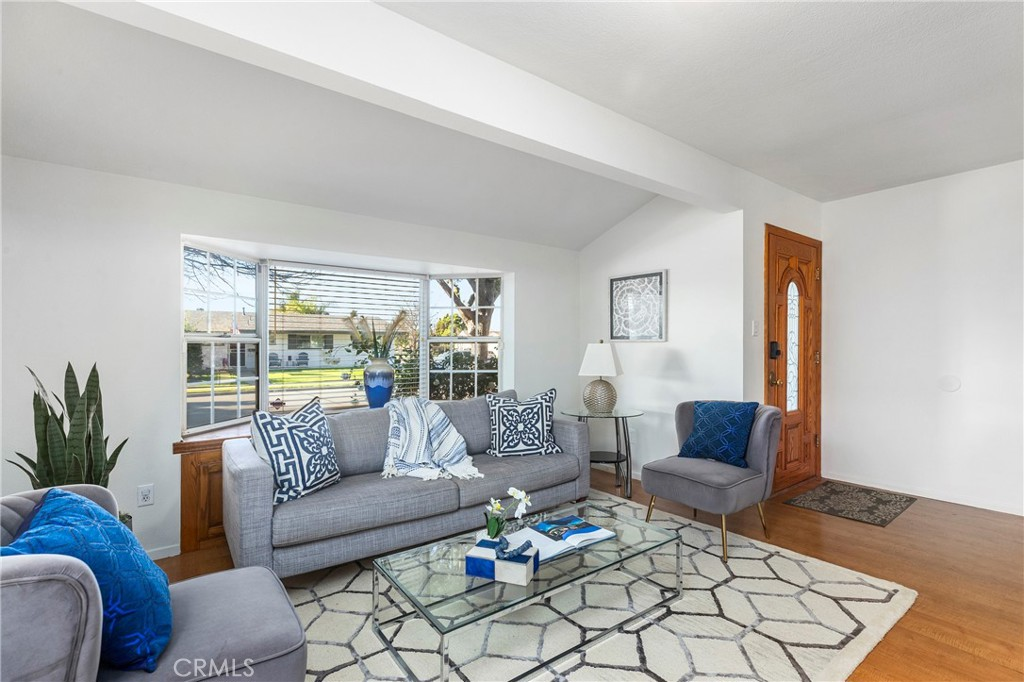
Physical staging uses real furniture, rugs, lighting, and accessories to help buyers understand a room’s purpose, scale, and layout.
It can be particularly useful when an empty living room feels awkward, a small bedroom is hard to judge, or a large open space needs clearly defined areas.
The advantages include:
- A furnished presentation that carries from the listing photos into the showing.
- A clearer sense of how beds, sofas, and dining tables fit.
- An opportunity to make the home feel welcoming and memorable.
The tradeoffs are equally real. Consultation, delivery, installation, furniture rental, and removal all need to be considered. Clearing rooms and finishing repairs or painting can add preparation time.
Then there is the renewal bill. If the home takes longer to sell—or the staging stays through escrow—rental charges may continue under the contract. Ask when billing stops: at an accepted offer, at removal, or at another agreed point.
Beautiful staging cannot compensate indefinitely for an asking price buyers will not accept.
Physical staging in a recent closing: 7666 Lilac Circle, Buena Park
What if you still live in the home—with pets?
Living in a staged property is different from visiting one.
Many staging companies restrict pets around rental furnishings or decline occupied projects with animals. Policies vary, so we need to check before building a plan around rented furniture. Hair, odors, scratching, accidents, and damage liability all matter.
That does not mean a household with pets has no options. An occupied-home consultation can focus on rearranging your furniture, removing excess pieces, simplifying surfaces, and improving lighting. Selective accessories may be possible if the provider allows them.
We also need a workable plan for showings, pet care, cleaning, and everyday life. A presentation you cannot realistically maintain may create more stress than value.
Need someone to take your dog for a walk during a showing—or help care for your other pets while you juggle the move? Our guide to Orange County pet sitting, dog walking, and training during a move introduces Less Stress Services and PupHub Dog Training. A little support can make the schedule easier on everyone, including the family member who thinks every doorbell is a personal emergency.
Virtual staging: less disruption, with different limitations
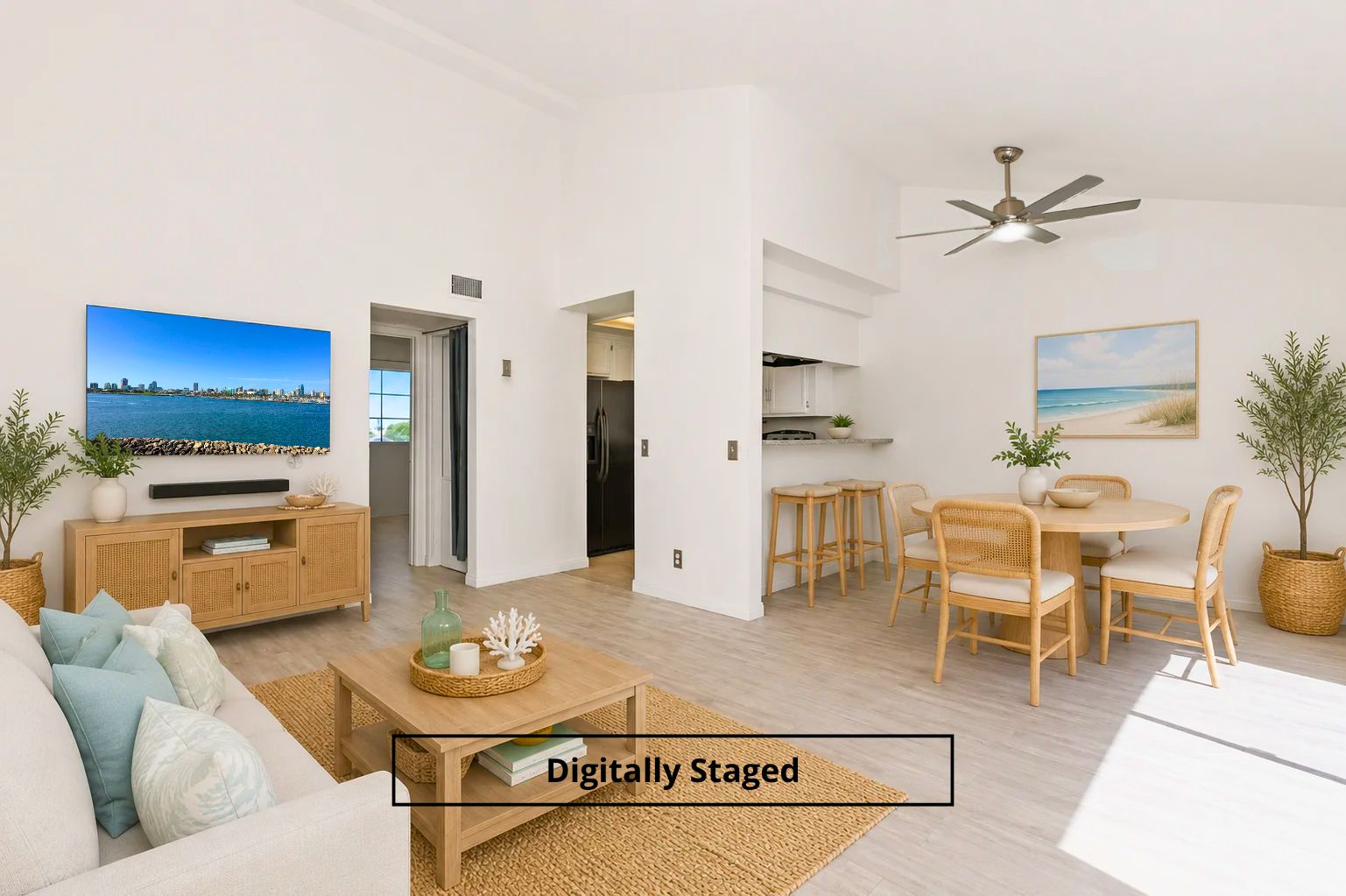
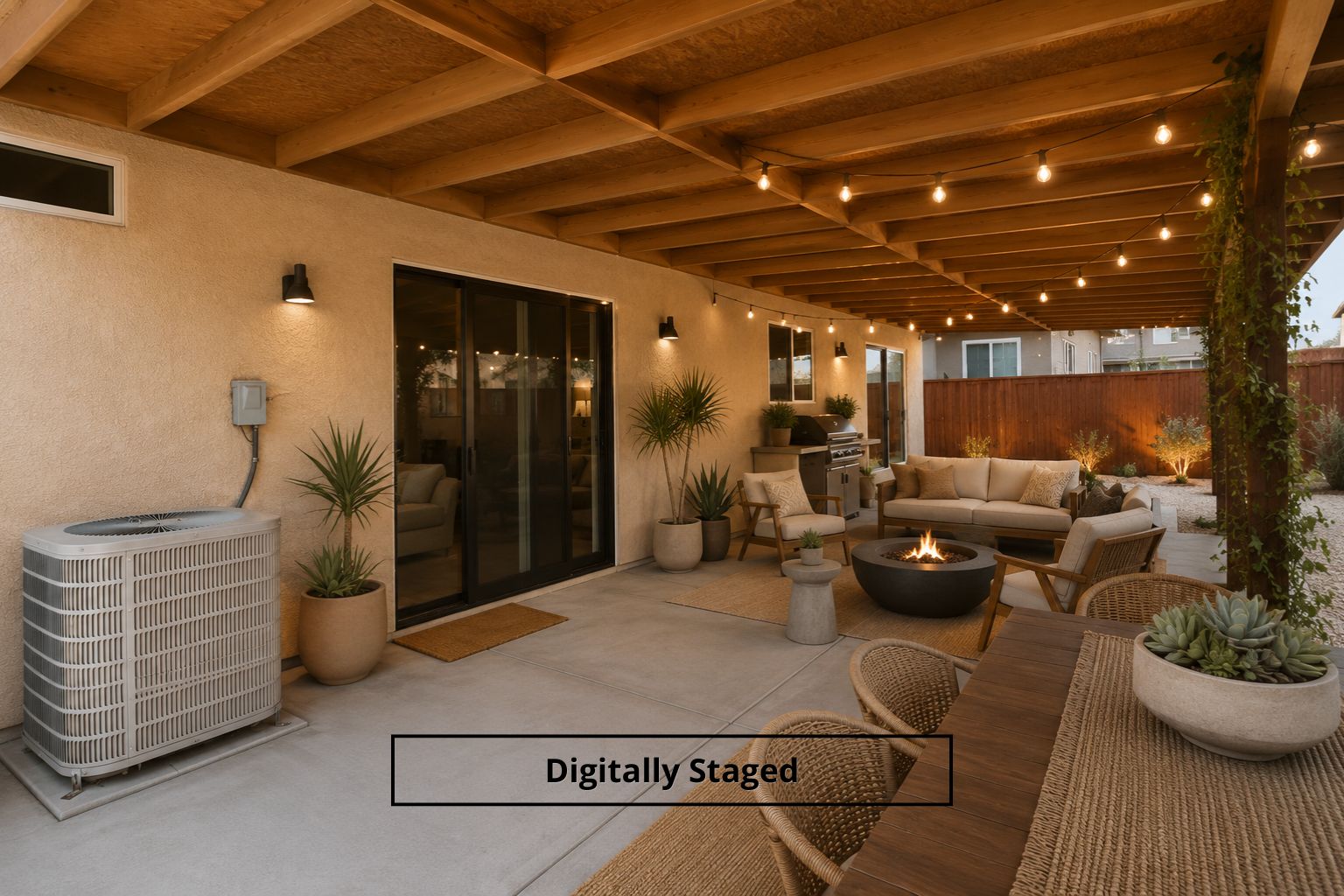
Virtual staging adds digital furniture and décor to photographs.
It can help illustrate an empty room’s potential without arranging furniture delivery or paying ongoing furniture rental charges. It may be practical when the budget is tight, the schedule is short, or physical installation is difficult.
However, it does not change the showing. Buyers still encounter the actual rooms, lighting, condition, and any odors.
One concern I have seen firsthand is the emotional letdown when buyers connect with a beautifully furnished photo and then walk into an empty room. The home may still be a good fit, but they have to rebuild that connection in person.
That is a pattern I have noticed on showings—no clipboard-wielding research team following me around. Some buyers appreciate seeing an unobstructed space; others benefit from furniture being there.
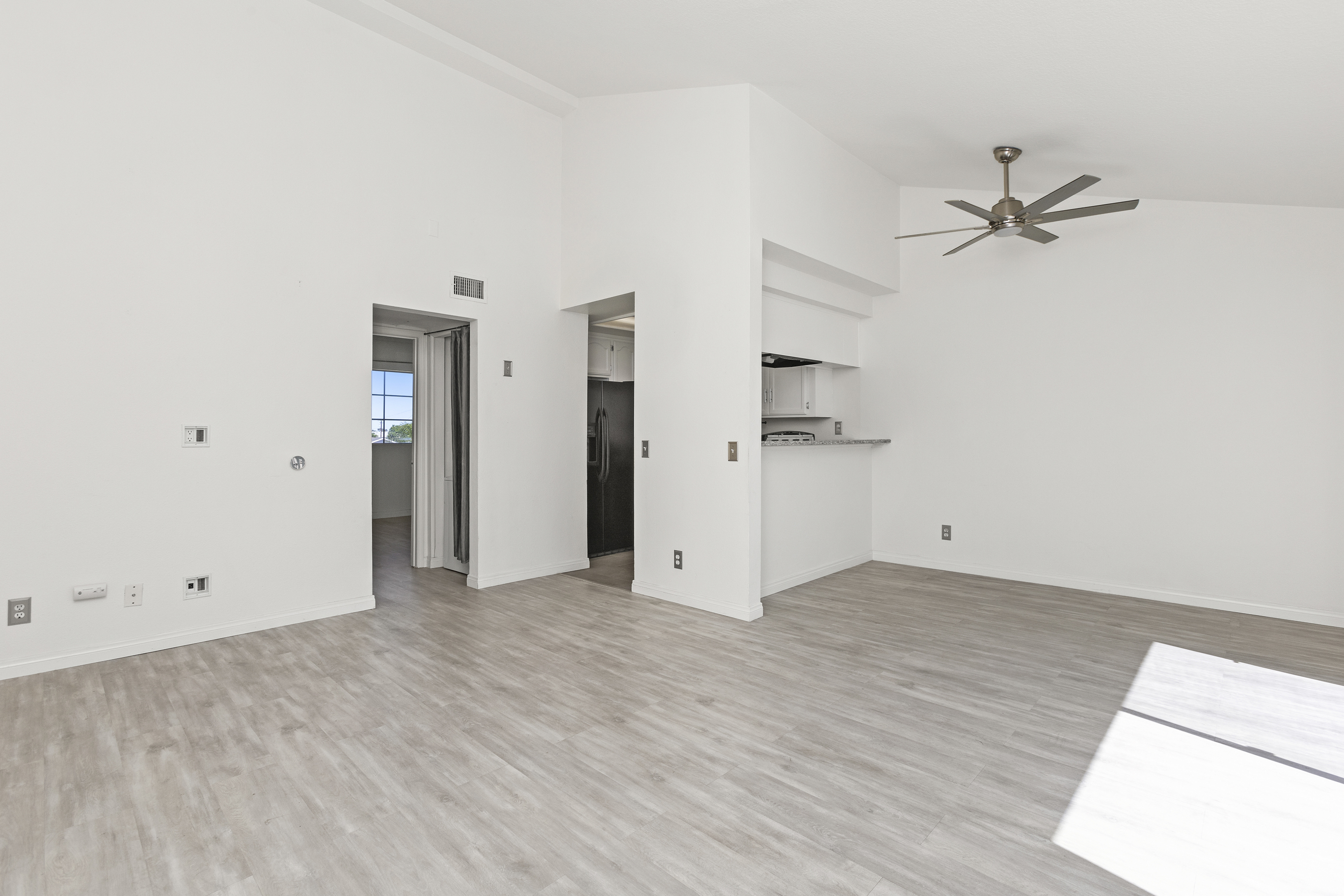
Showing the original photo with the digitally staged version is an MLS requirement. Under CRMLS Rule 11.5.2, the original, unaltered photo must appear immediately before or after each digitally altered image in the listing, and the altered image must be clearly labeled in its photo description.
Think of it as showing the room’s possibilities while keeping its feet firmly on the actual flooring. We also explain what buyers will see before the appointment, so the digital sofa does not become an unexpected disappearing act.
See the difference in our recent closings
These examples show different ways to present a property. They illustrate the marketing choices; they are not a contest to see which sofa caused a closing.
1121 Obispo Avenue #304, Long Beach: empty room vs. digital staging
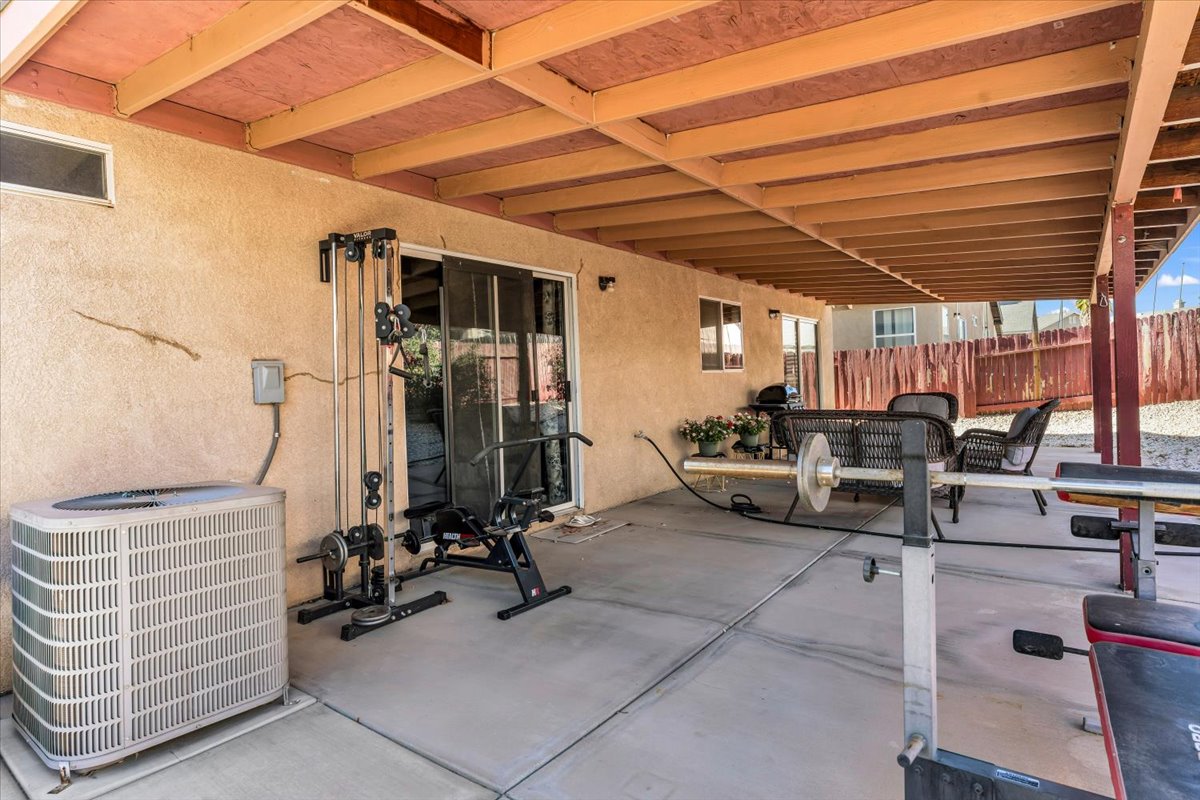
13684 Brynwood Street, Victorville: patio possibilities
Compare your staging options
| Option | Main benefit | Main tradeoff | Situation to consider |
|---|---|---|---|
| Physical staging | Buyers experience furnished rooms online and in person | Installation, removal, rental renewals, and possible pet restrictions | A home that needs help communicating layout or scale |
| Virtual staging | Shows furnishing possibilities with less physical disruption | The furnished image does not carry into the showing | An empty home where budget or logistics limit physical staging |
| Styling your existing furniture | Improves presentation while using what you own | Requires editing, preparation, and daily upkeep | Sellers remaining in the home |
| Clean, decluttered, unstaged presentation | Avoids staging rental costs and scheduling | Buyers must interpret the space themselves | A home whose layout and condition already show clearly |
Is staging worth one or two mortgage payments?
A question I like sellers to consider is:
If staging costs less than one or two mortgage payments, what would it mean financially if it helped you sell one or two months sooner?
The key word is if. Furniture does not come with a stopwatch or a guaranteed buyer. We use that comparison to make a decision, rather than promise a sale 30–60 days sooner.
For example, suppose your mortgage payment is $4,000 per month and the staging package costs $5,000. Two additional mortgage payments would total $8,000. That makes staging worth discussing, but the comparison is incomplete until we add preparation delays, rental renewals, and your other carrying costs.
We should also distinguish cash flow from expense: the principal portion of a mortgage payment generally reduces your loan balance. Interest, property taxes, insurance, HOA dues, utilities, and maintenance are more useful when estimating the economic cost of holding the home longer.
Before deciding, compare the total staging commitment with a realistic range of selling timelines. Include the time needed to get the property ready, not just its days on the market.
Can you stage a home with no upfront out-of-pocket cost?
Yes—our team is a resource for multiple options that can let eligible sellers stage now and pay at closing, with no upfront out-of-pocket staging payment.
These programs usually require sufficient equity in the property. We will compare eligibility, approval requirements, fees, covered services, and repayment terms for your situation.
The bill has a later date—not a disappearing act. We will review the total cost and any renewal charges so you know what to expect when it is time to pay.
If upfront cost is your main hesitation, you may have more choices than you realize.
Let’s choose a plan that fits your home—and your life
Full staging may be the right investment. A few carefully chosen changes may be enough. Virtual staging may offer the most practical balance.
We can compare your property with the competition, look at the preparation timeline, factor in pets and occupancy, and review multiple pay-at-close options where available.
Schedule a no-obligation consultation with Angie so we can determine the best direction for your unique situation.
Angie Weeks | Broker Associate | First Team Real Estate CA DRE #01398537 | AskAngie.com
Sources, for the curious
Want to peek behind the pretty pillows? Here is the research and guidance referenced above:
- National Association of REALTORS®: 2025 Profile of Home Staging.
- NAR’s 2025 staging findings and survey methodology.
- Real Estate Staging Association: first-half 2026 results and methodology.
- CRMLS: digitally altered image guidance.
Photo sources: original and digitally staged listing photographs from the Ask Angie photo folders for 1121 Obispo Avenue #304 and 13684 Brynwood Street. The Lilac Circle physical-staging image also appears in our contingent-sale case study. The photos illustrate presentation choices, not evidence that staging alone caused a particular sale result.






Leave a Reply